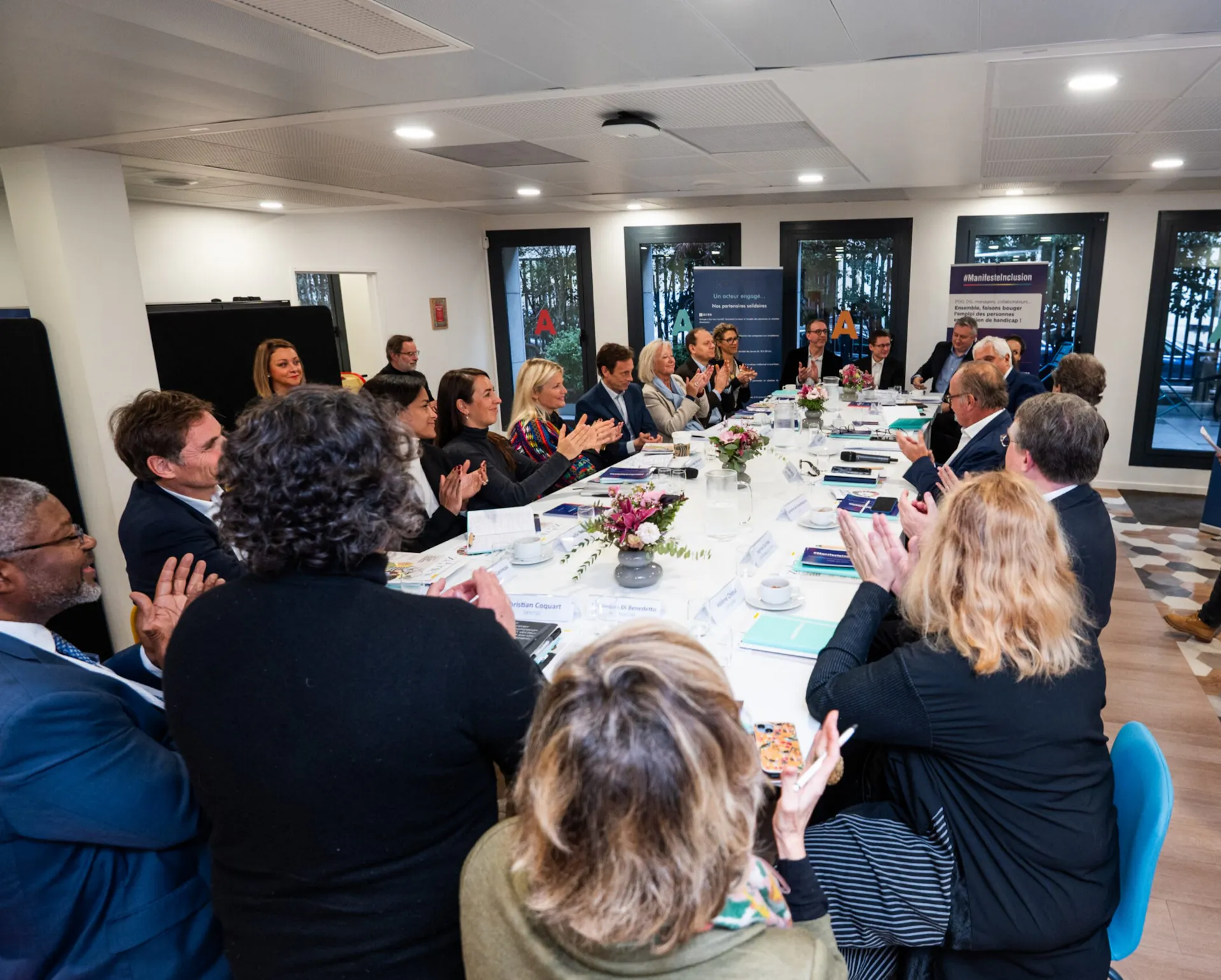
Corporate Concierge Services : Supporting Quality of Work Life
Discover how workplace concierge services improve QVCT, simplify employees’ daily lives, and strengthen their loyalty.
published on 06/07/2026

Choosing the right facility management expert means optimizing services, staying up to date with market trends, innovating, and enhancing the employee experience.
Facility management encompasses all the activities that ensure a site operates smoothly on a daily basis.
It covers a wide range of tasks: technical services, including multi-technical maintenance, regulatory inspections, energy monitoring, and preventive or corrective interventions; occupant services, such as reception, hospitality, mail, internal logistics, handyman services, consumables supply, concierge, or even catering. It also includes workplace environment services like cleaning, green space maintenance, waste management, and pest control, as well as safety and security, including access control, risk prevention, and incident management.
Often seen as support functions, facility management services actually play a central role in a company’s performance by contributing to the well-being of internal clients. Productivity at a site doesn’t depend solely on the buildings or equipment. It also relies on the quality of the work environment, the smoothness of the services offered to employees, and the ability to ensure continuous operations without interruption.
Effective service management therefore simplifies daily life for teams, limits pain points, and creates the conditions for improved productivity gains for businesses.
When facility management is run in silos, issues emerge rapidly. Requests can be misdirected, intervention times become longer, responsibilities become blurred, and internal teams spend time following up with different contacts. Sometimes, they are not even able to follow up because the people involved are unknown or the services too vague.
Outsourcing is a choice for facility management, provided the internal team is right-sized and able to manage multiple providers themselves. What increases complexity is not the number of providers, but the under-sizing of the facility management team to follow them, especially when the scope is too large. This particularly affects the quality of service.
Multiplying tools also adds complexity: CMMS for maintenance, quality control monitoring tools for cleaning, multiple ticketing solutions, or various reporting tools and formats. Without overall management, multiplying tools, time, meetings, and checks... the organization loses clarity, smoothness, and synergy.
This lack of coordination leads to duplication, delays, loss of cost visibility, and inconsistent service quality. It also has a direct impact on the employee and visitor experience. An unresolved meeting room issue, supply shortages, a technical failure, or poor reception guidance can quickly lead to frustration.
At the site level, these repeated pain points slow down operational efficiency and can sometimes even discredit facility management. They keep internal teams focused on day-to-day management issues instead of enabling them to concentrate on their core missions.
Optimizing onsite services starts with better centralization. Grouping requests, clarifying decision pathways, and identifying a dedicated point of contact make it possible to streamline communications and improve responsiveness.
Multi-activity coordination is also key. Facility management services interact with the Facility management (FM) manager, who manages and coordinates maintenance, security, reception, hospitality, cleaning, and occupant services. A technical intervention directly affects the visitor experience. An internal event may involve logistics, reception, security, and technical services. That is why each profession must be considered as part of a consistent whole.
Standardizing processes is another important lever. Formalizing procedures, defining expected service levels, and harmonizing practices help guarantee consistent quality, even in complex or multi-site environments.
Finally, monitoring performance indicators, or KPIs, provides a clear view of service quality and responsiveness. Processing times, request volumes, recurring incidents, employee satisfaction, associated costs—this data enables the identification of areas for improvement and adjustment of service management. This monitoring should also be included in a process of regularly reviewing KPIs, to redefine them according to relevance, usage, and changing operational needs.
At ARMONIA, we support facility management departments by overseeing and coordinating multi-service operations on their behalf. The goal is to coordinate all onsite services to improve operational performance, simplify daily management, and enhance service quality for employees.
This FM approach streamlines management with a single contact, contract, and invoice, while providing operational reporting and an overall view of services—without losing the operational excellence of each area of expertise. It allows for better coordination of teams, external providers, and various FM professions, bringing more clarity to facility management, workplace environment, real estate, human resources, supply chain, and quality of life management teams.
Structured and value-generating outsourcing
Outsourcing then becomes a true efficiency lever when a partnership is established with professional management oversight. It’s not just about delegating tasks, but organizing a service ecosystem capable of operating smoothly, coherently, and sustainably.
ARMONIA’s approach adapts to the specific needs of each organization, whether it’s a single site or a multi-site environment. It enables a global vision to be integrated with local realities, in a “global to local” and “local to global” logic. The strategies, standards, and indicators set at a global level are adapted to the needs of each site, while feedback from the field contributes to the evolution of overall management.